

Want to improve your lawn this fall? There are three things you can do to vastly improve the quality of your lawn and none of them involve pesticides. They do, however, involve a little sweat equity.
Fall is the best time to work on your lawn. The work is an investment in the future. The work you do now will seed (no pun intended) better results next spring.
Core Aerate
The first step is to core aerate. To do this you will need to rent a core aerator from a local equipment rental company. If you have like-minded neighbors, band together and rent one together for a weekend to save some money.
A core aerator removes a plug of soil from the ground. This allows air and water to better infiltrate deeper into the root system of your turf. Good air circulation reduces the threat of harmful insects and diseases.
Core aerating also helps breakdown the tough clay soil we have. This allows water and nutrients to more freely flow to the root systems. Leave the plugs on your lawn to naturally break up. The will help provide a good seed bed for the next step.
Over Seeding
Over seeding is simply the process of adding grass seed to the lawn. By doing this, you will be increasing the population of grass plants. More grass plant means that there will be less room for weeds to grow. Pretty simple, right?
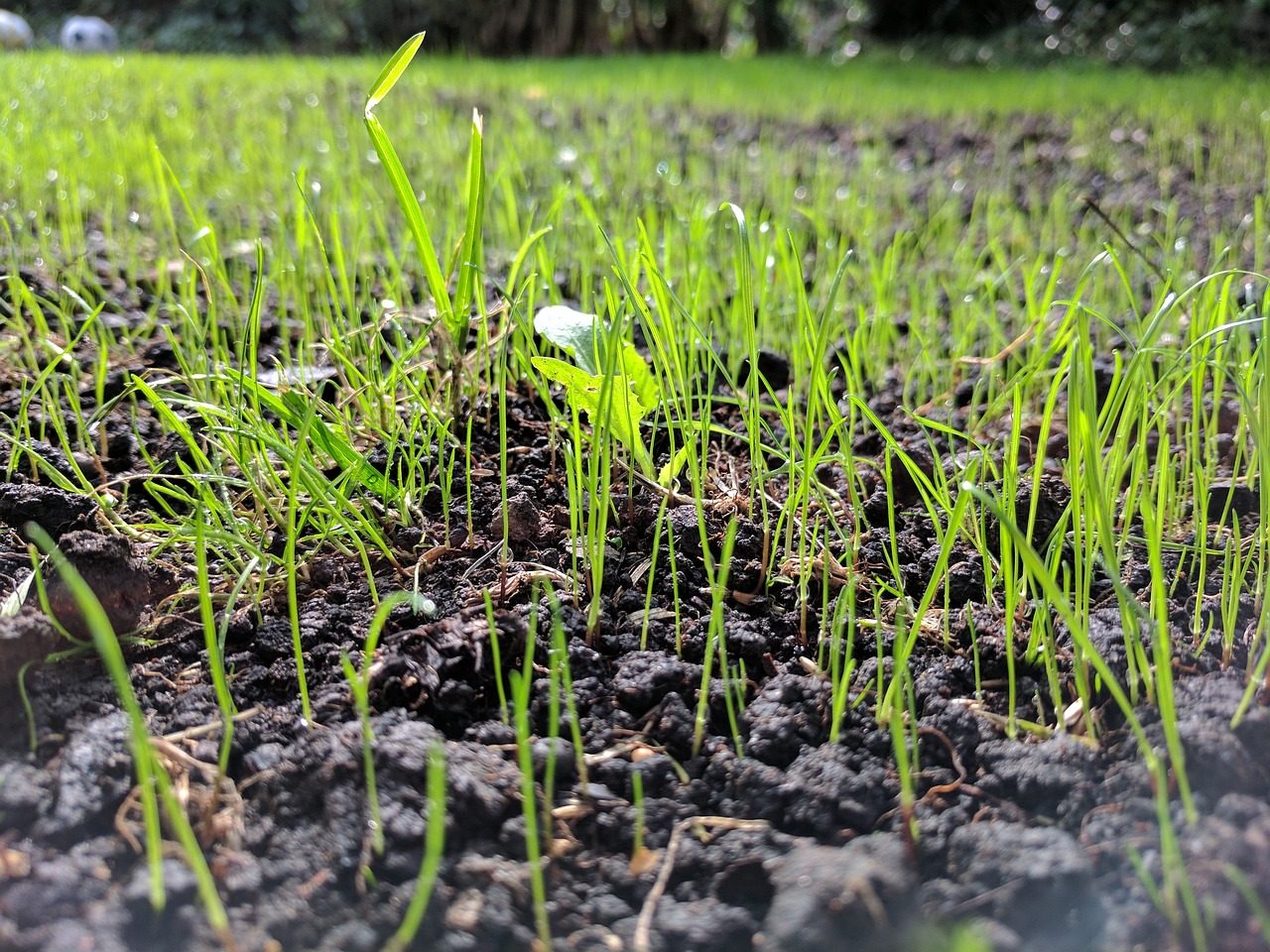 Do not skimp when purchasing grass seed. Quality matters. In Maryland, we generally look to mixtures of Improved Tall Fescue grass because if its resistance to diseases and drought stress. Plan to apply 6-8 pounds of grass seed per 1,000 square feet of lawn.
Care after seeding is important too. Watering plays a key role in getting your new grass seed off to a good start. Please review our watering instructions at https://allentucklandscaping.com/watering-instructions-for-new-landscapes/.
Liming
This is the part that most people do not fully understand so a basic (again, no pun intended) tutorial is in order. We know we have a lot of really smart customers so if this is insulting, please bear with us.
The ph scale measures acidity on a scale of one to fourteen, the lower the number, the more acidic something else. Seven is even. Our clay soil is generally acidic. The problem is that, for grass to take the best advantage of available nutrients, it involves a pH of between 5.5 and 6.5. If the pH is not in that range, all the fertilizer in the world is useless to grass.
Adding lime to the soil makes the soil pH less acidic. We can generally add 10-15 pounds of lime per 1,000 square feet of lime each year without worrying about moving the pH above the desired range. To be absolutely sure of what our soil need, you can always submit a sample to a lab for testing and recommendations. Follow this link to a lab that will accept your soil samples: https://www.agrianalysis.com/
One More Thing For Extra Credit
There is one more thing you can do to improve your lawn even more; add compost. A light topdressing of compost improves the soil exponentially and your lawn will love it.
Investing a little time and sweat is worth it to have the greenest lawn on the block.
Related Posts:
7 Things To Know About Watering Your Lawn
What Is The Correct Lawn Mowing Height
Remember, Allentuck Landscaping Co. is always here to help you design, install, construct and maintain you lawn and landscape. Give us a call!
Allentuck Landscaping Co. is Your Residential Landscape Company
Phone: 301-515-1900 Email: info@allentucklandscaping.com
At Allentuck Landscaping Co., our mission is to create beautiful environments for people to enjoy. We see landscaping as a way to improve people’s lives.
The Allentuck Landscaping Co. team has been delighting homeowners in Maryland, Washington DC and Northern Virginia for over 28 years with our turnkey approach to landscape design, installation, construction and maintenance. Most companies try to serve many types of customers at the same time; homeowners, shopping centers, office buildings and the list goes on. At Allentuck Landscaping Co., we focus on one customer, you, the homeowner. We have a singular focus on bringing you the best landscape practices, the best customer service, and the best value for your home.
Services Provide – Master Landscape Plans, Complete Maintenance Programs, Plantings, Patios, Walkways, Retaining Walls, Water Features, Outdoor Lighting, Outdoor Kitchens, Trellises & Pergolas, Irrigation Systems, Drainage Solutions, Grading & Sodding. Fire Pits & Fire Places, Spring Clean Ups, Decks, Fences
Areas Served – Chevy Chase, Bethesda, Potomac, Rockville, North Potomac, Darnestown, Gaithersburg, Germantown, Boyds, Clarksburg, Ijamsville, Urbana, Frederick and Washington DC.